
ARCHITECTURAL DESIGN V
(ARC60608/60306)
This module is a design studio module that focuses on place-making within dense urban environments. The module guides students to explore how architecture responds to social, cultural, economic, and urban contexts. Through urban analysis, townscape appraisal, and design development, students propose responsive architectural solutions that enhance everyday urban life. The studio emphasizes contextual sensitivity, design narratives, and the integration of form, space, regulation, and community needs to create meaningful architecture for urban communities.
Phase 1
Preliminary studies – Townscape Appraisal & Mini Urban Intervention
Phase 1.1 : Townscape Appraisal
-
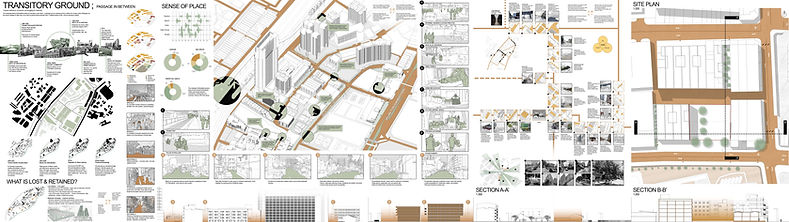
Conduct a Townscape Appraisal of the selected Brickfields site
– Study the area at two scales:-
Macro scale: how the site fits into the city (Brickfields & KL context)
-
Micro scale: detailed study of the immediate site and surrounding streets
-
-
Collect site data and documentation
-
Site measurements, location plans, lot boundaries, sections, elevations
-
Photos, sketches, maps, behavioural observations
-
-
Analyse the site using key townscape elements, including:
-
Genius Loci (history & urban morphology)
-
Imageability (Kevin Lynch: paths, edges, nodes, landmarks, districts)
-
Character of Place (Bentley’s responsive environment)
-
Identity of Place
-
Sense of Place (human experience, enclosure, rhythm, movement)
-
Townscape qualities (urban fabric, façade, materials, scale, rhythm)
-
-
Behavioural study (micro level)
-
Observe who uses the space, what they do, when, where, and how
-
Record activities at different times (morning, afternoon, night; weekday & weekend)
-
-
SWOT Analysis
-
Identify Strengths, Weaknesses, Opportunities, and Threats of the site
-
Do this for both macro and micro contexts
-
-
Present findings clearly
-
Use diagrams, maps, sketches, photos, and analytical drawings
-
Apply urban theories (Shamsuddin, Lynch, Bentley, etc.)
-

Phase 1.2 : Mini Urban Intervention
-
Propose a Mini Urban Intervention
-
Design an intervention within 15–20m radius around your selected micro site
-
It must respond directly to issues and opportunities identified in Phase 1.1
-
-
Improve public space & place-making
-
Activate underused or neglected spaces
-
Strengthen sense of place in Brickfields
-
Encourage social interaction for local communities
-
Enhance the street experience
-
-
Key design focus areas
-
Walkability (safe, continuous, comfortable pedestrian paths)
-
Connectivity & wayfinding (clear directions, readable spaces)
-
Inclusivity (universal access, all user groups)
-
Public life (spaces to sit, gather, pause, interact)
-
Greening & sustainability (trees, shading, low-maintenance landscape)
-
-
Types of intervention you can propose
Examples include:-
Shaded walkways / pergolas
-
Pocket parks or community gardens
-
Street furniture (benches, seating steps, platforms)
-
Public art / placemaking elements
-
Temporary or permanent activation spaces
-
Improved crossings, edges, or thresholds
-
Lighting strategies for safety and night use
-
-
Design must be contextual
-
Respect existing urban character, scale, and identity
-
Do not overpower or erase the local townscape
-
The intervention should feel like it belongs to Brickfields
-
_page-0001%20(1).jpg)

Project Phase 2: Architectural Design Strategy
In Phase 2, I developed an architectural design strategy for a Learning Centre in Brickfields, Kuala Lumpur. Based on the townscape and behavioural analysis from Phase 1, this phase focused on defining a clear design concept, target users, and programme strategy that respond to the urban context and community needs.
The work included site synthesis, precedent studies, and 1:200 massing explorations to investigate building form, spatial organisation, and the relationship between architecture and public space. The outcome of this phase established the design intentions, urban plaza strategy, and architectural direction that guided the final design development.


Phase 3: Design Development-Architecture for place-making
The architectural design for the Learning Centre in Brickfields was fully developed into a resolved building proposal. This phase focused on refining form, space, circulation, and façade design, while integrating structural systems, building services, environmental strategies, and statutory requirements.
The project emphasized place-making within a dense urban context, responding to street edges, public realms, and community activities. Design decisions were informed by tropical architecture principles, including natural ventilation, daylighting, shading, and façade articulation. The outcome was a coherent architectural proposal supported by detailed drawings, models, and visualisations.
REFLECTION
This project began with an observation of the site as a transient space—one characterised by constant movement but lacking opportunities for meaningful engagement or long-term growth. The initial challenge was to transform this condition of passage into an architectural strategy that encourages interaction, learning, and community empowerment rather than merely facilitating circulation.
Through the design development, the building evolved into a connector that gathers people from multiple directions and translates movement into social encounter. Organised as a gradual transition from public to private, the spatial arrangement reflects the concept of Path to Place to Community. Public programmes such as kiosk shops and event spaces activate the ground and first floors, extending pedestrian movement into shared social platforms, while upper levels accommodate vocational training spaces that support focused learning and skill development through recycled and low-cost materials.
However, a critical lesson from this semester lies in understanding the relationship between form and use. While the adoption of a Kengo Kuma–inspired timber lattice façade contributes to a visually light and appealing architectural language, it revealed a disconnect with the functional needs of the recycled-material vocational programme. This highlighted the importance of ensuring that formal and aesthetic decisions are not only visually expressive but also directly support programme, material logic, and everyday use.
Ultimately, this project reinforced the understanding that architecture is shaped by people rather than appearance. Design decisions must prioritise human needs, use, and experience, as architecture only becomes meaningful when it serves as a supportive framework for people’s lives, growth, and community development.